“Here there be dragons” is a phrase found on some old maps indicating dangerous, unknown, or unexplored territory. It was a symbolic warning of perils, though it was rarely meant to be taken literally by medieval mapmakers.
It’s not stretching things in the least to say we’ve entered very dangerous and unknown territory since Trump took office last year. We’re returning to a ‘might makes right’ ethos in international relations, were strong nations feel they have the right to do what they want to smaller countries, simply because they can. As one of Trump’s minions recently gloated, power is the only thing that matters. Everything else are just ‘legal niceties’. Worthless, in other words.
Here there be dragons indeed.
I’ve been writing sci-fi for twenty years now. My personal favorite is a series centered on aliens who love coffee and visit our planet to trade for it. It’s light-hearted escapism and definitely not meant to be taken seriously. It’s meant to give people a break from reality, to provide a mental and emotional reset.
I have an awful lot of fun writing these kinds of stories, and it gives me an important break from the daily barrage of unrelenting horrid news. I hope my readers find the same respite in them as I do.
Because somehow, every day the news manages to be worse than the day before. This past weekend my wife asked me, in all seriousness, when WW3 was going to start. She’s a very down-to-earth, gentle soul, who is not given to hyperbole. I’ve often asked myself the same question but never gave it a voice until last weekend.
The monsters are loose on the world stage and, as predators will do, they glory and luxuriate in their power to crush those who are weaker. And in the minds of men like Trump and his sycophants, weaker people and nations simply aren’t worthy of respect, life or liberty, for no other reason than they are simply weaker.
That’s why I believe we need fantasy stories and good satire now more than ever before. Chesterton said that, “Fairy tales do not tell children that dragons exist. Children already know that dragons exist. Fairy tales tell children that dragons can be killed”.
When the monsters are loose and the times evil, we need imaginative fiction to remind us that dragons can be defeated.
Thanks for visiting today. This is the first part of an article I wrote on Substack. You may read the full article for free here:
I’m excited to announce that my new political satire, Wally & the Anti-fascist Fairy, is now available on Amazon, Kobo, Apple and B&N in digital format and paperback.
Wally and his friends soon find themselves in a lot of hot water when they get labelled as Antifa just for wearing fairy costumes in public.
The cover for my new political satire
~
It all starts one day when some high school bullies think it would be great fun to pick on the weird kids who dress up as fairies. When Wally and his friends decide they’ve had enough, they take to the streets dressed in animal and fairy costumes to protest against the bullies.
No bullies!
Their ‘no bullies’ day protest goes viral on social media, and it’s not long before it comes to the attention of a thin-skinned president who’s convinced the protests are about him. Anger turns his orange face to brighter hues of tangerine as he watches the protesters dancing in the streets, and he designates anyone wearing a fairy or hippo costume as an Antifa terrorists.
The Gestapo arm of Homeland Insecurity – the National Interspecies Costume Enforcement agency (NICE) – starts rounding up and incarcerating hippos, frogs and fairies – or anyone dressed like one. But they can’t build the NICE concentration camps fast enough, so the president comes up with another one of his great policy ideas: detain the protesters in zoos. They’re dressed up as animals, after all.
Zoo officials, however, aren’t so sure it’s a good idea to put people in the zoo, even if they are dressed like animals, and are faced with a terrible decision: follow the orders of a deranged president, or disobey.
And that’s when the adventure for Wally and his Fairy friends really gets going.
I’ve been on a bit of a roll lately, posting tips on writing from world class writers. I’m doing this mostly for myself and the few writing friends I’ve managed to collect over the years as a way to keep these tips always easily accessible for them and myself. I have no illusions that these posts are reaching many others, as my website gets very little internet traffic. (I’m too cheap to pay the ridiculous costs to boost my Google rankings.) But if you are lucky enough to be one of the few who happen upon my little website, I hope you will find them helpful.
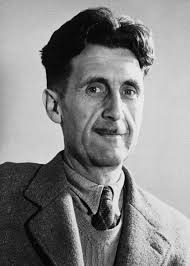
So here’s the next installment in my “Advice for Writers” series. Today I’m sharing some tips from George Orwell.
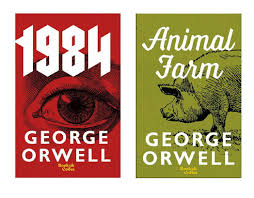
George Orwell, of course, needs no introduction. His classics, “1984” and “Animal Farm”, defined an entire literary genre. He gave these writing tips in an essay he wrote in 1946, “Politics and the English Language.”
So here they are, unedited and unadulterated:
A scrupulous writer, in every sentence that he writes, will ask himself at least four questions, thus:
What am I trying to say?
What words will express it?
What image or idiom will make it clearer?
Is this image fresh enough to have an effect?
And he will probably ask himself two more:
Could I put it more shortly?
Have I said anything that is avoidably ugly?
One can often be in doubt about the effect of a word or a phrase, and one needs rules that one can rely on when instinct fails. I think the following rules will cover most cases:
Never use a metaphor, simile, or other figure of speech which you are used to seeing in print.
Never use a long word where a short one will do.
If it is possible to cut a word out, always cut it out.
Never use the passive where you can use the active.
Never use a foreign phrase, a scientific word, or a jargon word if you can think of an everyday English equivalent.
Break any of these rules sooner than say anything outright barbarous.
~
~
From Orwell’s essay “Politics and the English Language.” As always, I do my best to give credit where credit is due. I discovered these wonderful tips on The Gotham Writers website.
Or, why IMHO the best advice for new writers is no advice.
I was browsing through some old archived folders on my laptop the other day – yes, I was that bored – and came across a collection of writing tips I’d gleaned several years ago.
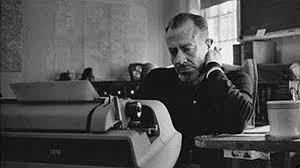
In my opinion #2 is the best, and #4 is also very good, but then these are tips from John Steinbeck, so who am I to judge.
Personally I still hold to what I wrote a couple of years ago, in which I argue that the best advice – for the new writer – is no advice. Don’t go around looking for advice or attending writers conferences. Don’t do any of that until you’ve finished a complete full length novel. Until then, just write. You need to make all your own mistakes, and experience the struggle first hand, before any advice will make sense. Until then it’s just theory. Once you’ve completed a novel to the best of your ability, then you’ll be better able to appreciate just how brilliant Steinbeck’s advice really is. Because it really is.
Abandon the idea that you are ever going to finish. Lose track of the 400 pages and write just one page for each day, it helps. Then when it gets finished, you are always surprised.
Write freely and as rapidly as possible and throw the whole thing on paper. Never correct or rewrite until the whole thing is down. Rewrite in process is usually found to be an excuse for not going on. It also interferes with flow and rhythm which can only come from a kind of unconscious association with the material.
Forget your generalized audience. In the first place, the nameless, faceless audience will scare you to death and in the second place, unlike the theater, it doesn’t exist. In writing, your audience is one single reader. I have found that sometimes it helps to pick out one person—a real person you know, or an imagined person and write to that one.
If a scene or a section gets the better of you and you still think you want it—bypass it and go on. When you have finished the whole you can come back to it and then you may find that the reason it gave trouble is because it didn’t belong there.
Beware of a scene that becomes too dear to you, dearer than the rest. It will usually be found that it is out of drawing.
If you are using dialogue—say it aloud as you write it. Only then will it have the sound of speech.
But perhaps most paradoxically yet poetically, twelve years prior — in 1963, immediately after receiving the Nobel Prize in Literature “for his realistic and imaginative writings, combining as they do sympathetic humour and keen social perception” — Steinbeck issued a thoughtful disclaimer to all such advice:
If there is a magic in story writing, and I am convinced there is, no one has ever been able to reduce it to a recipe that can be passed from one person to another. The formula seems to lie solely in the aching urge of the writer to convey something he feels important to the reader. If the writer has that urge, he may sometimes, but by no means always, find the way to do it. You must perceive the excellence that makes a good story good or the errors that makes a bad story. For a bad story is only an ineffective story.”
Photo credit MJ Wahl, taken at Bayfield ON, July 2023
And beach reading, of course, means mindless fluff and pulpy escapism. We go to the beach to relax, after all. Like most Canadians, once the good weather arrives, I want to soak in the beautiful warm summer as much as possible – because the winters are long and dark and the summers all-too short.
If you’re like me, I’m not interested in reading anything serious when I’m at the beach. As the author of pulpy sci-fi, however, I’d argue that it’s always a great time to read escapist fiction – not just at the beach.
Six reasons why pulpy escapism is important
Reading escapist fiction is a great way to relax and de-stress – which also means it can be an important form of self-care. So don’t underestimate the value of mindless escapism.
I’d like to offer this short list of five or six reasons why reading escapist fiction is good for us:
A good sci-fi or fantasy novel will transport you into a different world. It allows you to take a break from real-world problems and the stresses of life, and immerse yourself in a different world.
Related to the above, reading escapist fiction allows you to experience something new. A good book draws you in so that you feel like you’ve entered the world of that book, and are experiencing it. The first novel I ever read was about a caveman, set in prehistoric times when Neanderthals still roamed the world with the first early humans. I was about 10 years old, and I still remember the experience of how I felt like I was really living in that prehistoric world. It was the book that got me hooked on reading, and eventually writing, and I still can’t think of a better reason or reading fiction.
It allows you to live vicariously through other characters, and helps you imagine yourself as someone else – such as the hero bravely fighting off nasty slime-covered aliens, or fire breathing dragons.
If you’re going through some challenging personal times, reading escapist fiction can offer you an important break from difficult emotions like loneliness, anxiety or sadness. It allows you to temporarily escape from every-day life, and we all need that at times.
After a long day, reading escapist fluff is a great way to unwind and get mentally and emotionally prepared for bed-time. In other words, it can help you get to sleep easier. I think I’m like most people, in that I can’t just be busy-busy with work or chores at night, then hop into bed. I need a wind-down period of an hour or two before I can go to bed feeling relaxed enough to sleep.
It teaches you that evil aliens (or wicked dragons or any sort of evil enemy) can be defeated. I’m stealing a thought from C.S. Lewis here, who said that the point about fantasy isn’t that dragons are real, but that the dragons can be defeated. Escapist fiction teaches us about heroism, courage and perseverance, and that we can all be heroes to the people within our circles when we have the courage to do the right thing.
We can all be courageous heroes
“Since it is so likely that (children) will meet cruel enemies, let them at least have heard of brave knights and heroic courage. Otherwise you are making their destiny not brighter but darker.” C.S. Lewis
I’ll leave you with that thought. Thanks for reading my blog today, and have a great rest of the summer!
Postscript: One last tidbit – some food for thought when it comes to summer vacation. There’s an interesting article in the Guardian about a company in the UK that’s taking the entire month of August off. Europeans have generally been much better about taking time off and balancing work with life. I think this is a great idea, and it’s time for North Americans to get on board with Europeans when it comes to work-life balance and taking more time off.
C.S. Lewis once said that, “You can never get a cup of tea large enough or a book long enough to suit me.”
With all due respect for C.S. Lewis, tea is for amateurs. Professionals like myself drink coffee. But the tea vs coffee controversy aside, I am in full agreement with Lewis’ general sentiment. What’s better than coffee and books?
What could be better than spending a rainy day with a good book and a cup of coffee?
It’s a cool and rainy day where I live, and I’ve been sitting on my couch giving a lot of thought to what makes for a good day. Being in the business of writing escapist fluff, I’m somewhat of an expert in the field and in my humble opinion I think it’s pretty simple really.
Happiness is a good book and a cup of great coffee. Click on this image to check out more great coffee quotes from BookGlow!
Bake cookies. Feeling down in the dumps? The news got you freaked out? Turn off the TV, brew some coffee and spend the afternoon baking cookies. Once Upon a Chef is one of my favorite cooking websites. Check out the great recipes on her website.
Now settle down into your comfy couch with a book, a plate of cookies and a cup of coffee, and spend the rest of the day immersed in it.
That’s it. It doesn’t have to get complicated folks. One of the best things you can do if your feeling down is get up and do something positive. Spending an afternoon or evening baking cookies and reading a good book is a much better than obsessing over CNN or Fox News.
I had a strange experience with life imitating art while writing Octavia Seven.
Octavia Seven is my time-travel romance about Octavia, an anthropologist from the 23rd century who travels back to our time. Her mission was to study life in our day before a killer virus wipes out humanity, leaving very few survivors. She was supposed to just conduct a few studies then return to her own time before the pandemic starts. But of course in fiction it can never be that simple, and she meets Jake, falls in love, and that’s when things start to get complicated for her. Jake can’t return with her, and she can’t stay with a killer virus on the way…
The real thing is never as much fun as fiction
I finished the first draft well before Covid-19, long before there was any hint of the real pandemic that was about to hit us in 2020.
I set the manuscript aside for a bit, fully intending on going through it a couple more times before sending it off to my proof-reader.
However, before I could finish the manuscript and get it to my proof-reader, Covid arrived and a real pandemic started sweeping the world. In those early days of covid, we had no idea how bad it may get, but as the bodies started piling up I lost all interest in my story, and I stopped working on it.
A bit too close to home
In my fictional story, I even had the virus starting in China. It was a bit too close to home, and I dropped the project, not knowing if I would ever finish it.
During those first few months of covid it felt like we were living in some kind of sci-fi plot, and I lost all interest in apocalyptic movies and fiction, because, well, it felt like we were really in one.
This is what it felt like in 2020
We got through it, and thankfully it didn’t turn out to be an apocalypse. Last year things started to get back to something more akin to normalcy, and over time I was able to gain some perspective on Octavia Seven.
I dusted off the story and got back to work on the manuscript. I really loved the characters and the story and felt like it was worth publishing, so I finished my re-writes and sent it off to my editor for proof-reading.
But I made some edits to the ending.
Who needs an apocalypse? They’re really not all that much fun…
I’m really not a fan of apocalyptic fiction any more. We have grandkids – I won’t tell you how many because the overall number is a bit ridiculous, but let’s just say we have several adorable grandkids who are still pretty little. Four of them are five and under. The thought of them picking through the ruins of a devastated Earth, scavenging to survive and hunting rats for their next meal, absolutely horrifies me. Only people who don’t have kids could possibly enjoy writing that kind of garbage.
So after living through Covid, I re-wrote the ending of Octavia Seven. It’s now a time-travel story about how love can change history for the better.
I’m a huge fan of happy endings. Who needs bad endings that leave you depressed? If I wanted to be depressed, I can read CNN for that.
You’ll likely need some cookies while reading your favorite fan-fiction. My favorite chef, Jenn Segal, has some fantastic cookie recipes. Check out her website here. Go and bake some before sitting down to read.
I’m excited to announce the release of my latest sci-fi thriller, The Tolerance Bureau, about a social media skip chaser.
Sci-fi Bounty Hunter
What if in the future you could get dislike‘s, not just like‘s, on your social media posts and comments? Now imagine a cancel culture that’s taking things too far, and getting too many dislikes will get you arrested for cerebral offenses and insensitivity.
That’s where the Tolerance Bureau comes in.
The social media police are coming for you…
Think you can just say whatever you want on social media and get away with it? Think again! The Tolerance Bureau is watching everything you post. The Bureau is the new federal agency responsible for monitoring the internet to make sure it is kept clean from offensive postings so that no one’s feelings ever get hurt.
Offending too many people makes you a Cerebral Terrorist, and the Bureau will bring you in for mandatory psychological therapy. Try to run, and bounty hunters will track you down and lock you up in one of the Bureau’s re-education camps.
That’s Jim Rogan’s job, and he’s one of the best at it.
Hillary Wells, famous astrophysicist, made a few controversial comments on social media – and offended too many people. Now she’s wanted for Intellectual Terrorism and there’s a warrant for her arrest. And the Tolerance Bureau has assigned Special Agent Jim Rogan to track her down and bring her in.
Rogan thinks it’ll be a piece of cake. What could possibly go wrong? As it turns out, pretty much everything…
The Tolerance Bureau is set in a near future that is all too plausible…
You can’t please all of the people all of the time, an old sage once said. And you can’t be all things to all people. Books are like that too. No book, no matter how brilliant or witty or marvelously written it may be, can appeal to everyone.
That’s because we are often looking for different things at different times. Sometimes we want serious fiction, sometimes humour. Or you may be in the mood for something light and fluffy. Mindless escapism. Crime drama. Or a spy drama. Or a steamy romance. Fun-filled adventure. To help the reader find the sort of book they are looking for, books are classified into different genres, and within each genre are categories and subcategories.
‘Hard’ sci-fi or ‘soft’?
Take, for example, my own specialty: sci-fi. Within that broad genre there’s serious “hard” sci-fi. One of the key promises within that category is that it will stay within the boundaries of real science. The Martian is an excellent example of this. All the science and technology portrayed in that novel is real and current. Then there is space opera. In space opera you get to make up your own science, and use fantastical made-up things like worm holes, time travel, warp drives, alien civilizations, and so on. Star Wars and Star Trek are very obvious examples of this genre.
A good book, regardless of its genre and category, will deliver on the promise that’s inherit within its category. And publishers put a lot of time and effort into coming up with titles and covers for books that will give customers a good feel for what can be expected between the covers.
Judging a books’ intention by its cover
I think my publisher, Franklin Street Press, did a great job coming up with the covers and titles for the two books (to date) in my Jack Winters Detective Series, which is about Jack’s friendship with alien coffee smugglers who have come to Earth looking for coffee.
I think the covers and titles of my books make it pretty obvious – there’s nothing series here folks. This is not ‘hard’ sci-fi. I’m all about mindless escapism, frankly. I get enough “serious” drama from my day job and reading the news.
Looking for ‘hard’ sci-fi in all the wrong places
But there’s just no pleasing some people. No matter how brilliantly witty the title and cover of a book may be in accurately portraying what a reader might expect between the front and back cover, some people still manage to get it wrong.
Recently a reviewer on Amazon criticized “Aliens, Spaceships and the Occasional Latte” for not being very plausible. I kid you not. This reviewer also said that as sci-fi, it was a bit too “soft”. Now, that’s funny. Was this reviewer seriously expecting “hard” sci-fi with a plausible, realistic story line when they picked a book with a title like this, featuring an alien holding a steaming cup of coffee?
Hmmm…
Space Opera
Relaxing, humorous, and definitely not ‘hard’ sci-fi.
I wonder what his first hint was that this wasn’t hard science? Perhaps it was the cover with the picture of an alien holding a cup of coffee? Or was it the title, “Aliens, Spaceships and the Occasional Latte”? Or maybe it dawned on him in chapter 21, when Aunt Beatrice complains about alien visitors landing their spaceship in her cabbage patch. I don’t know, but it’s hard to grasp how anyone could pick up a novel with such a title and cover and expect anything other than fun-filled escapism.
A good book delivers on its promise
I don’t mind being judged on the basis of what my books are intended to be. But being criticized for something the book was never intended for is just plain silly. He may as well criticize my book for not having any good recipes for baked lasagna.
I think my novels deliver exactly what you might expect from the kind of covers and titles I’m using. There’s no subterfuge here. It’s beach reading escapism at its best. I like to think of my novels as modern day dime novels. Fun filled adventures in space.
We all need to take a break to recharge and relax
We often turn to forms of entertainment to relax, recharge, and take a break from the seriousness of work and daily life. Dime novels came into vogue during the American Civil War, arguably some of the darkest years for that country. People needed a break from the horrible news, and TV hadn’t been invented yet. Dime novels provided an affordable form of escapism. During the depression people snapped up cheap “pulp” fiction and went to the movies. They needed the break.
That’s what myself and other authors writing similar books are trying to do. Provide light-hearted escapism. We need it these days. I can’t remember a time when the news was so consistently depressing and awful on so many different fronts.
If you are looking for light-hearted escapism, you’ve come to the right place. If you want serious, hard sci-fi with “plausible” story lines, that’s not what I do. You won’t find it here.
That’s my rant for the day. Thanks for reading my blog!
I don’t know about you, but there is only so much doomscrolling through world news I can take. After a stressful day at work, I cannot spend the entire evening reading the news, with it’s warnings of global famine, the possibility of tactical nukes getting used, and the daily outrages committed by the Russian military on the people of Ukraine, and endless American election cycles.
Don’t get me wrong, I’m not advocating that we stick our heads in the sand and ignore what’s happening, but I can’t spend all my free time doing laundry and reading the news. I’m not sure that would be healthy. As I’ve blogged previously, I believe escapist fiction is a legitimate need. We all need to unplug from the daily grind of reality, the news, work, chores, and find a way to unwind and relax. Many people enjoy escapist fiction, and that’s why I write light-hearted sci-fi. Well-written fiction has a way of drawing you in so that you forget that you are reading and feel like you are living in that world. That’s when you know it’s a good book.
Too much of a good things isn’t necessarily better.
Relaxing and unplugging from reality with a good book or movie is one thing. What Mark Zuckerberg is trying to sell us with his Metaverse is something else entirely. Like most forms of mental illness and addictions, it’s a good thing that’s been taken too far.
“The primary way we live.” Did you catch that? Are you as disturbed by that as I am?
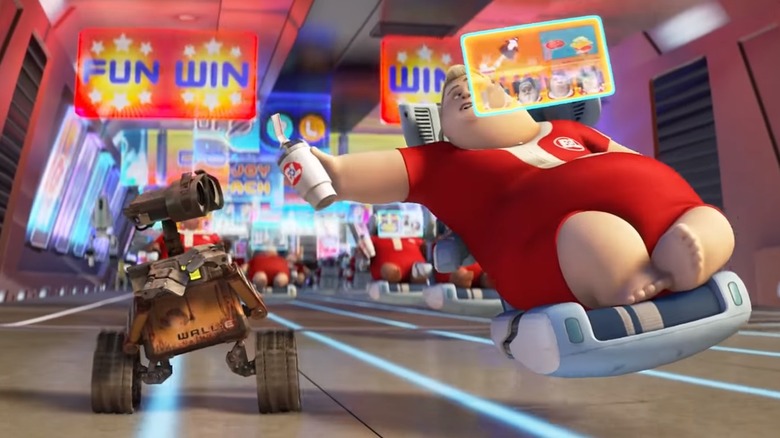
It reminds me of that cartoon movie that came out a few years ago, Wall-E. I remember very little of that cartoon, but the image of overweight adults in chairs glued to screens has always stuck with me. Remember? People lived on a spaceship, and never had to get out of their chairs. They spent all their time looking at virtual screens floating in front of their faces. Everything they needed was brought to them while they remained seated, completely absorbed in their screens.
They even sat around a pool, not even bothering to get into it, but remained in their chairs watching movies of people playing in the water. Morbidly overweight, they were so absorbed in their virtual reality that they’d even forgotten how to take care of their bodies. So lost in their virtual world, their real world and real bodies no longer mattered to them.
Mark Zuckerberg’s Metaverse is a big, horrid step in that direction.
Don’t be a Sucker for Zucker
Of course Zuckerberg and the other rich tech guru’s of the online world want us spending more time in their metaverse, to the point of living there. And of course they will position themselves as the bold visionaries of a bright new future. They’re not stupid. They know how insanely rich they will become if millions of people start actually, “primarily living their lives” there. It’s a great way to completely monetize our lives and make them even richer. Forget about billions of dollars. That’s now looking like chump change for these guys. They’re looking at becoming trillionaires.
I quit Facebook and deleted my account two years ago. I find Facebook, like most social media, a monumental waste of time. However, as silly as Facebook was (or is), Zuckerberg is trying to take us into even greater depths of nonsense. He wants us to quit reality, and join him in his new virtual world. We’ll be able to meet friends, hold business meetings, shop, work, socialize, all within the Metaverse. In other words, do our living there. Just like the people in Wall-E.
Apparently, millions of people spending hours every day on Facebook isn’t enough for Zuckerberg. Or isn’t making him rich enough. He now wants us to abandon reality and move into his virtual world. What is he going to try selling us next? Automated systems that will bring us snacks without having to get off the couch?
Enjoy escapist fiction, but don’t escape reality
Reading good fiction or relaxing in front of the TV is one thing, and I believe healthy and normal. What Zuckerberg wants us to do isn’t healthy, and we must never let it become ‘normal’. Escaping reality by living in his virtual metaverse for hours on end can’t be good for us. It may be great for Zuckerberg. After all, he’s looking to monetize us – our time, our lives – to an even greater extent by getting us to buy into his version of ‘reality’, so he can add to his already excessive fortune.
Don’t be a sucker for Zucker. Don’t unplug from reality – unplug from Zuckerberg instead. The Metaverse is the product of a sick prepubescent mind that doesn’t want to grow up. Stay away from it and read a good book. Or make popcorn and invite some friends over to watch a movie. Start a new hobby that gets you away from the screen and doing something real with your hands, in the real world. That’s what normal, healthy adults do.
Do yourself a favour, and keep living in the real world. That’s my rant for the day.